A free book for New Zealand home sellers
Before you agree to auction, read this.
Thirty years in real estate taught Pierre de Klerk where sellers quietly lose tens of thousands of dollars, without ever finding out.
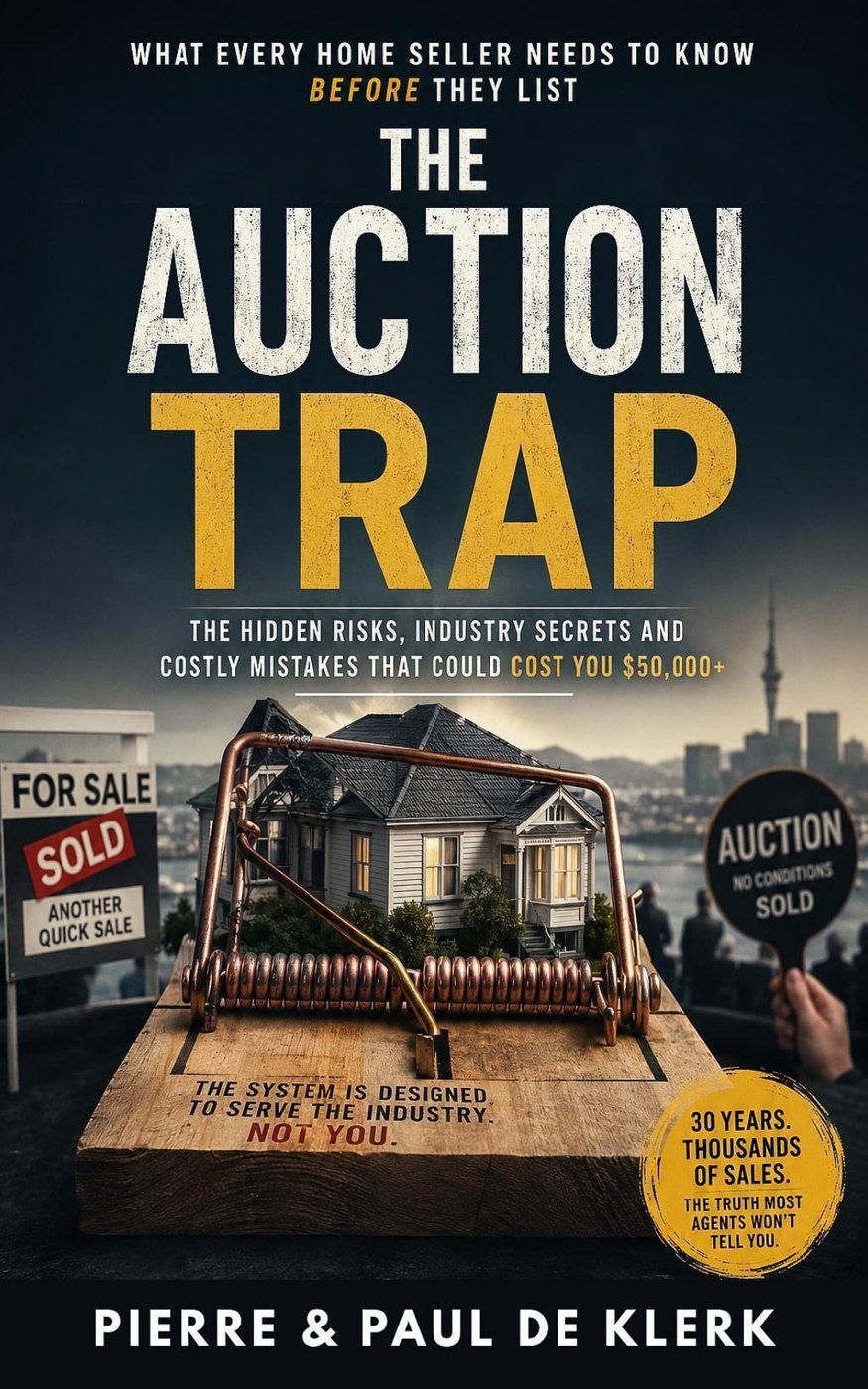
now retired
free to download
Your free copy
Read it before the first agent visits.
The most important decision in most sales is made in the first five minutes at the dining room table.
- The full book as a PDF, straight after you sign up
- 15 short videos from Pierre, one by email every two days
- Unsubscribe in one click, any time
The second-bidder problem
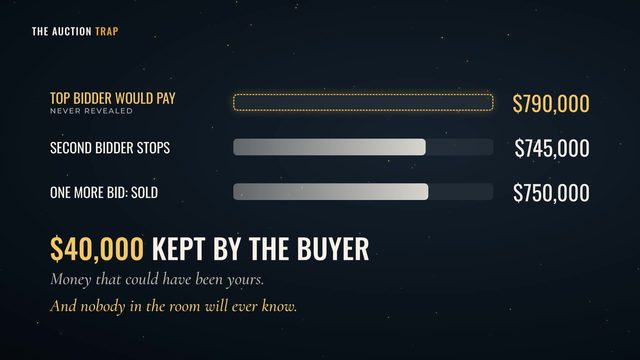
An auction doesn't find your buyer's limit. It finds the second bidder's.
The buyer who wants your home most only has to beat the next-highest bidder by one increment. Whatever they were prepared to pay above that stays in their pocket. Nobody records the gap.
A well-run private sale, where each buyer decides without seeing the others, is far more likely to reach the top buyer's real limit.
Get the free bookThe Auction Trap in 60 seconds
Watch it happen
15 short videos
Watch the first three free
Each video takes one idea from the book and explains it in under three minutes. Videos 1 to 3 are free to watch now. Download the free book and all 15 unlock straight away.
 2:21
The five minutes that decide your sale
 2:27
Why buying your home didn't prepare you to sell it
 2:37
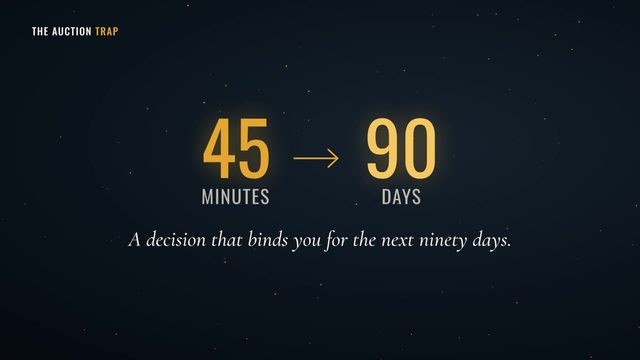
You sign a contract. The agent makes a promise.
 2:37
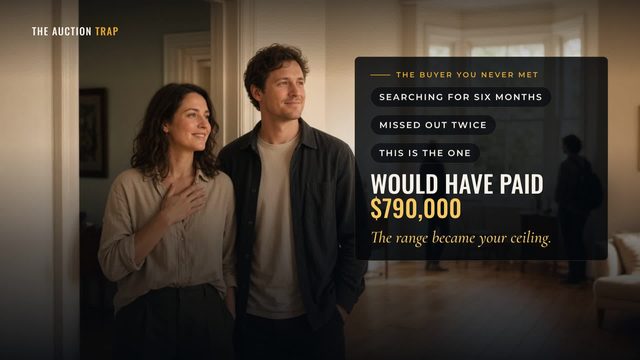
You pay for everything, but control almost nothing
 2:42
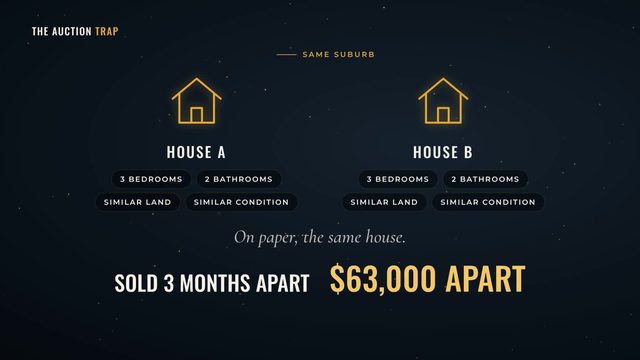
The myth of market value
 2:53
Two similar houses, $63,000 apart
 2:46
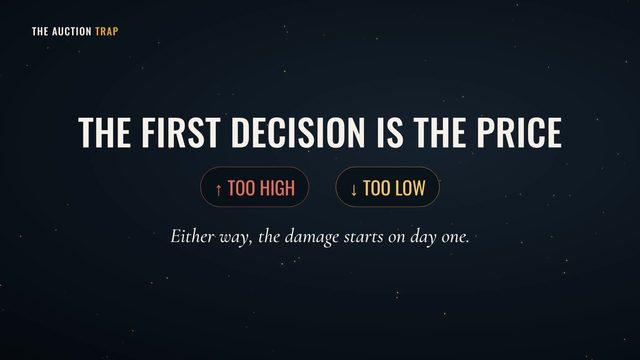
Priced too high, or too low, costs you either way
 2:52
The bidder who would have paid $40,000 more
 2:48
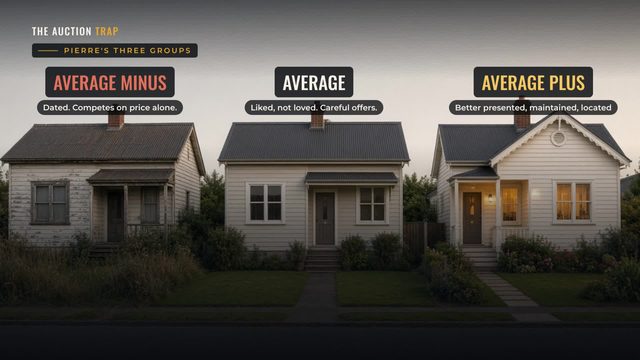
Your home is not average
 2:46
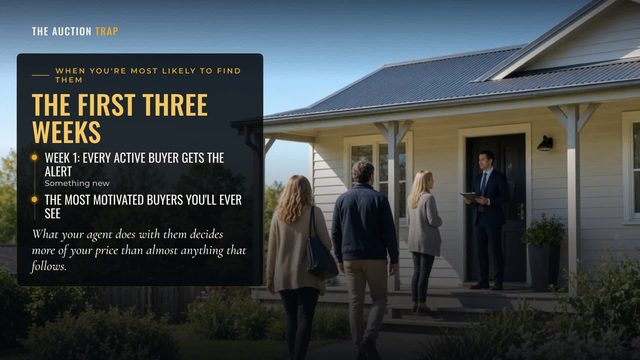
The first three weeks decide your price
 2:53
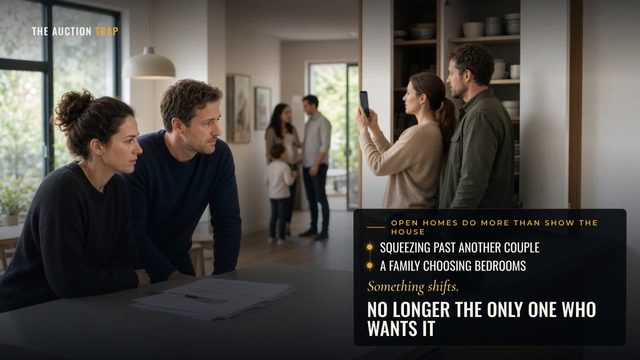
How real competition is created
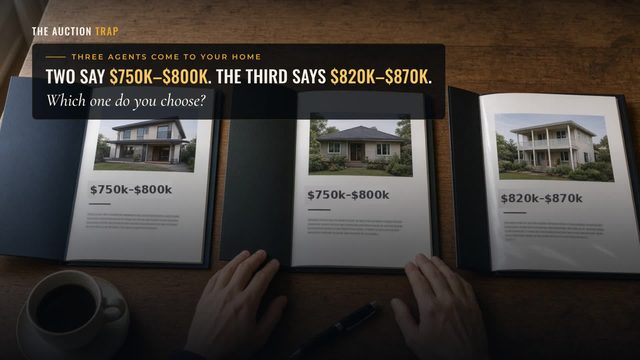 2:40
The most suspect number in the room
 2:45
$10,000 to you. About $200 to the agent.
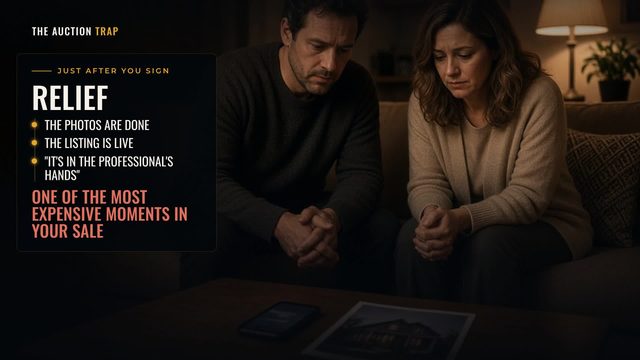 2:43
Stay in control after you sign
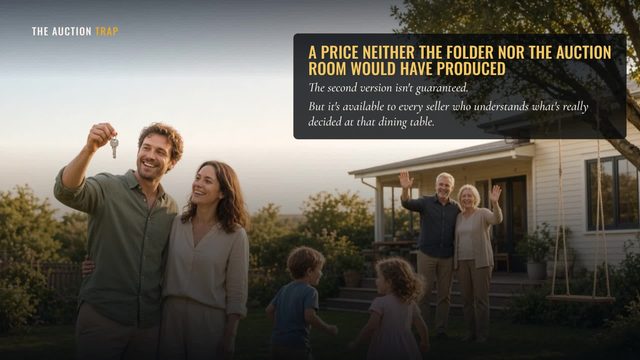 2:48
How David and Sue's story ends
Want all 15? Download the free book and every video unlocks immediately. You'll also get one by email every two days.
Get the free book and all 15 videosInside the book
What you'll know before the agent arrives
This book is the briefing to read before that first conversation at the dining room table. Open any one for the short version.
Chapters5–6
Why "market value" can cap your price
Two similar homes, three months apart: one sold under pressure for $695,000, the other for $758,000. Both end up in your valuation as if they mean the same thing.
Chapter8
Five questions to ask before you agree to auction
Why auction, for this home, now? How many finance-ready bidders? What happens if it passes in? The quality of the answers tells you whether it's strategy or habit.
Chapters9–11
How premium prices are made
Buyers buy a feeling, and the most motivated arrive in the first three weeks. Strong prices come when buyers see that others want your home, not when they watch every bid and see exactly where rivals stop.
Chapter12
How to choose the right agent
Treat the highest price estimate as the most suspect, not the most hopeful. Ask for every estimate in writing, and judge agents on how they negotiate, not how they present.
Chapter13
The commission arithmetic nobody shows you
An extra $10,000 from a counter-offer is $10,000 to you, and about $200 to the agent before splits and tax. That explains a lot about what happens when an offer arrives.
Chapter14
Staying in control after you sign
Agree before you sign how you'll be kept informed: a written update after every open home and a weekly call. When an offer arrives, the informed seller judges it with context. The passive seller judges it with anxiety.
Chapter15
What your home offers, and to whom
Build your own property profile before you meet anyone, so you can test an agent's view instead of simply accepting it. Buyers discount for doubt by more than the repairs would cost.
Chapter17
A step-by-step plan for selling
Before, during and at the offer: ten steps in order of financial importance, including the week-three review that stops a campaign drifting.
On the listing agreement
You are signing a contract. The agent is making a promise. Those are not the same thing.
Pierre de Klerk, Chapter 3When you choose an agent, you sign an exclusive listing agreement, usually for around 90 days. It legally ties you to that one agency for the whole period. If your home sells during that time, they are owed their commission, however the buyer found it.
In return, you get a promise to work hard for the best possible price. But nothing in a standard agreement requires the agent to reach any price, or to negotiate in any particular way. The book shows you what to ask, and what to agree in writing, before you sign.
The author
Selling in the next month or two? Talk to Pierre first.

Pierre de Klerk
real estate
Pierre owned and ran a multi-award-winning real estate agency for thirty years. Today he works on the vendor's side as a Vendor Mentor, helping homeowners get the most from their agent and sell for the best price their home can achieve.
In a one-on-one session he takes you through how the process really works, which method of sale suits your home, and what to ask and agree before you sign anything. Then he introduces you to an agent he trusts to do the listing and selling.
There's no charge for a session with Pierre. If you go on to list with an agency he introduces, he is paid a share of that agency's commission. He'll explain exactly how it works when you meet.
Questions
Before you ask
Is the book really free?
Yes. It's the full book, 222 pages and 18 chapters, as a PDF. You can download it straight after you sign up, and we'll email you a copy too.
Who is it for?
New Zealand homeowners thinking about selling, especially first-time vendors and anyone who has been told auction is the only sensible way to sell.
Is this an attack on real estate agents?
No. As the book puts it, the problem in most cases is not the people, it's the structure. A good agent adds real value. The book helps you choose one well and work with them as an informed client.
What emails will I get?
Pierre knows life is busy, and not everyone has time to read a whole book, however useful it is. So he'll send you 15 short emails, one every two days. Each links to a video of under three minutes that explains one key idea from the book, so you get the most important ideas even if you never finish it. Every email has a one-click unsubscribe link.
What does a session with Pierre cost?
Nothing. If you go on to list with an agency Pierre introduces, he is paid a share of that agency's commission. He'll explain exactly how it works when you meet.
I'm not in Christchurch. Can Pierre still help?
Yes. Pierre meets vendors in Christchurch and surrounds in person, and anywhere else in New Zealand by Zoom.
What do you do with my details?
We use them only to send you the book, Pierre's emails and, if you ask, to arrange a session. We never sell or rent them. You can ask us to see, correct or delete them at any time under the Privacy Act 2020.
Something else you'd like to know?
Send Pierre a message and he'll reply personally.
Message sent
Thanks. Pierre will reply personally, usually within one working day.
The Auction Trap
You've decided to sell. Now decide to sell well.
Read the book before the first agent visits. It's free, and what's in it could be worth tens of thousands of dollars to you.
Get the free book